
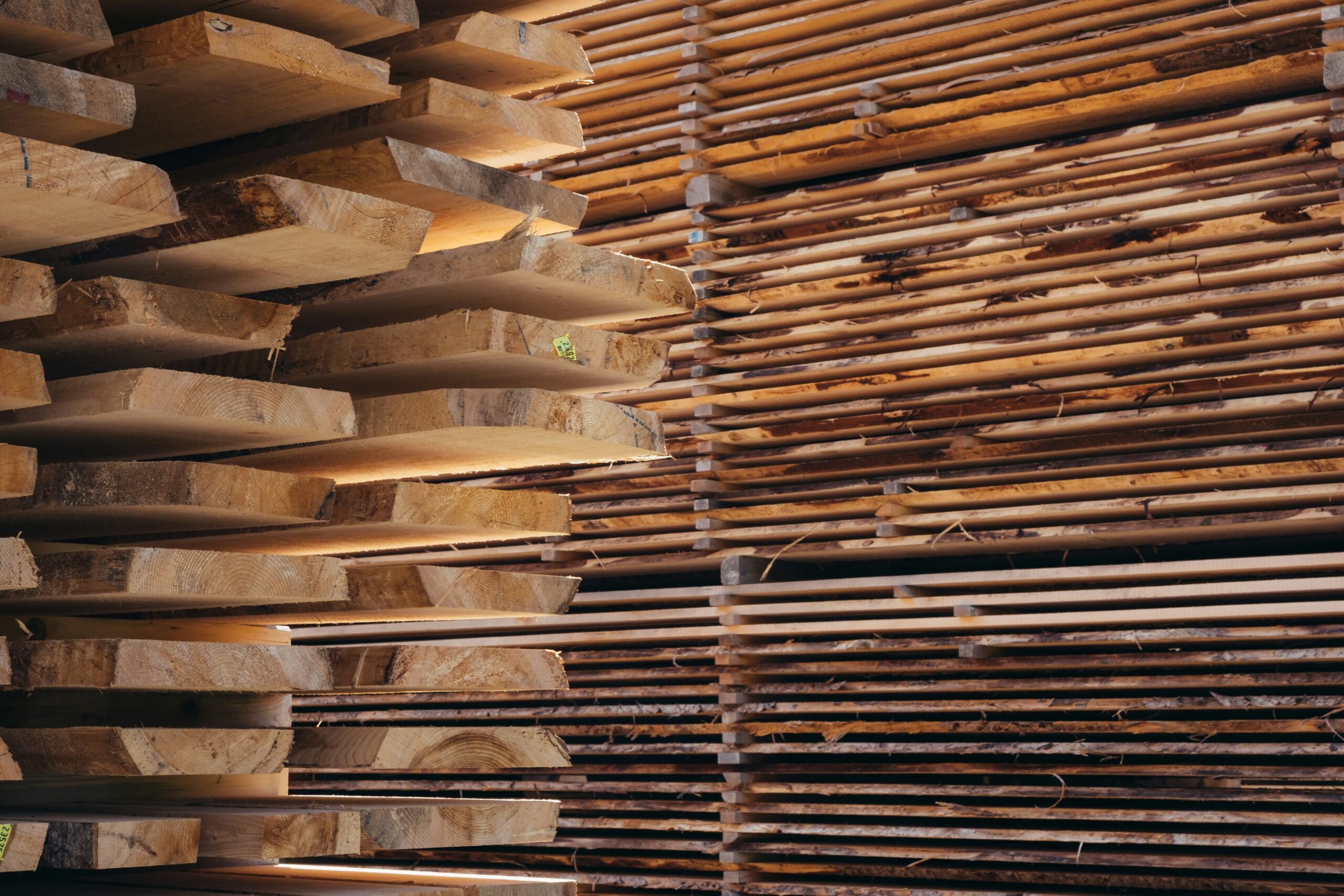
There are many things to consider when constructing a structural frame. Engineered strength and following architectural drawings is key. From the moment you decide what lumber to use for your trusses. You want to ensure you know what to look for when buying lumber for trusses. Dimensional lumber at your local lumber yard will not cut it. There are many factors to consider when deciding on your wood species and grades for trusses.
When purchasing lumber for roof and floor trusses, you want to ensure your wood has high density, fiber strength and moisture content. All lumber used in roof and floor trusses is graded and inspected for these factors before they are plated together to form your truss. Poor quality lumber can cause roof SAG and floor deflection. It can also cause the truss to fail if your connectors slip off of the wood.
Knowing what wood species to use for your trusses can allow you to buy the right materials for your project. If you are building a long span clear span building or commercial facility you will want to use the right lumber species.
What Lumber is Best to Use for Trusses? What to Look for in Lumber for Trusses
Most trusses are made with structural lumber that has been graded for strength and quality.
The type of lumber you choose for your trusses will determine how much weight your truss can support and how long of a span you can reach. There are many calculations that go into engineering a truss. You want to make sure your lumber can withstand these loads.
Lumber for trusses should meet building code standards for deflection. By using a higher grade of lumber you will decrease the chance of your truss warping or twisting. When your trusses are plated together with metal connectors you want to make sure your lumber can withstand the pressure.
Why Use Southern Yellow Pine for Trusses? What are Southern Yellow Pine Trusses?
Southern Yellow Pine is one of the strongest lumber species used for roof and floor trusses.
Southern Yellow Pine Trusses are made from one of the strongest species of wood. Southern Yellow Pine is grown in the southern United States and has a very high density. This allows for greater strength when compared to other species of lumber. Southern Yellow Pine is great for commercial applications that require a strong structural frame.
Southern Yellow Pine is also great for holding nails. When your trusses are being plated together you want to make sure your lumber can hold onto those connector teeth. Southern Yellow Pine is also able to be treated with preservatives to help prevent rot and decay.
What is SPF Lumber? What are SPF Lumber Trusses?
SPF stands for Spruce Pine Fir lumber.
SPF lumber is made up of many different species of wood. Some of these species include Spruce, Pine and Fir. SPF lumber is a great option for your trusses because it is lightweight and affordable. Many builders choose to use SPF lumber for their trusses because of its affordability.
Although SPF lumber is not as dense as Southern Yellow Pine it is still a very strong option for your trusses. Because SPF lumber is lighter it can be easier to handle on the jobsite.
Why Use Douglas Fir for Trusses? What are Douglas Fir Trusses?
Douglas Fir is known for its strength and can be used in many different truss applications.
Douglas Fir is a very popular choice for trusses. It has a high density and can withstand heavy loads. Douglas Fir is also resistant to warping and twisting. If you are looking for a strong lumber option for your trusses Douglas Fir is a great choice.
Douglas Fir has a high modulus of elasticity which means it can bend and flex under load. This makes Douglas Fir ideal for long span buildings that require a strong structural frame.
Can you use engineered wood for trusses? What are Engineered Wood Trusses?
Yes. Engineered wood products can be used in trusses to increase strength and span.
Engineered Wood Trusses are made with a combination of solid sawn lumber and engineered wood products. These products can be used in place of traditional lumber to help increase the strength of your trusses. LVL or Laminated Veneer Lumber is one of the most common engineered wood products used in trusses.
By using engineered wood products you can help decrease the amount of lumber needed for your trusses. This can help you reach longer spans with less material.
Do you need to use a certain grade of lumber for trusses? What Lumber Grades are used for Trusses?
Yes. There are different grades of lumber that can be used for trusses.
When selecting lumber for roof and floor trusses you will want to make sure you are using the correct grade of lumber. There are many different grades of lumber that can be used for trusses. Some of these grades include #1, #2 and Select Structural. Each grade of lumber will have different properties that can affect the strength of your truss.
Moisture content is also something to keep in mind when selecting lumber for trusses. You will want to make sure your lumber is kiln dried and has a moisture content of 15% or less.
Quick Quiz | What Lumber is Used for Trusses?
- What is the strongest species of lumber used for trusses?
- SPF
- Southern Yellow Pine
- Cedar
- What does MSR stand for?
- Moisture Surface Rating
- Machine Stress Rated
- Max Span Rating
- What moisture content should your truss lumber be?
- 25% or higher
- 20%
- 15% or less
Answers: 1-B, 2-B, 3-C
What factors do manufacturers consider when choosing lumber for trusses?
There are many factors that manufacturers consider when selecting lumber for trusses.
Manufacturers will use software to calculate the loads that will be placed on each member of the truss. Once they know what loads will be placed on each member they can select the appropriate lumber species and size. They will also consider the environment that the truss will be placed in.
By using these factors, manufacturers can ensure that their trusses are built to last and can withstand the loads placed on them.
What are the benefits of prefabricated trusses?
There are many benefits to using factory-built trusses.
Prefabricated trusses are more efficient than site-built trusses. Because they are built in a factory, they can be cut with precision and will have less waste on the jobsite. They also require less labor to install.
If you are looking for quality lumber and prefabricated wood trusses, look no further than Latco Truss. We offer a wide variety of lumber species and can build your trusses to your specifications. Contact us today to learn more about our products and services.
FAQ
Q. What is the best wood to use for trusses?
Southern Yellow Pine and Douglas Fir are some of the best woods to use for trusses. They are both very dense and can withstand heavy loads.
Q. Can you mix different species of lumber in a truss?
Yes. You can mix different species of lumber in a truss. Many trusses are built with a combination of different lumber species.
Q. Why is it important to use kiln dried lumber for trusses?
Kiln dried lumber will help prevent your trusses from warping and twisting. It will also help prevent your trusses from failing.